
Behind IPCEI-CIS at Infobip: commiting to a three-year EU research project
A deep dive into the IPCEI-CIS project.

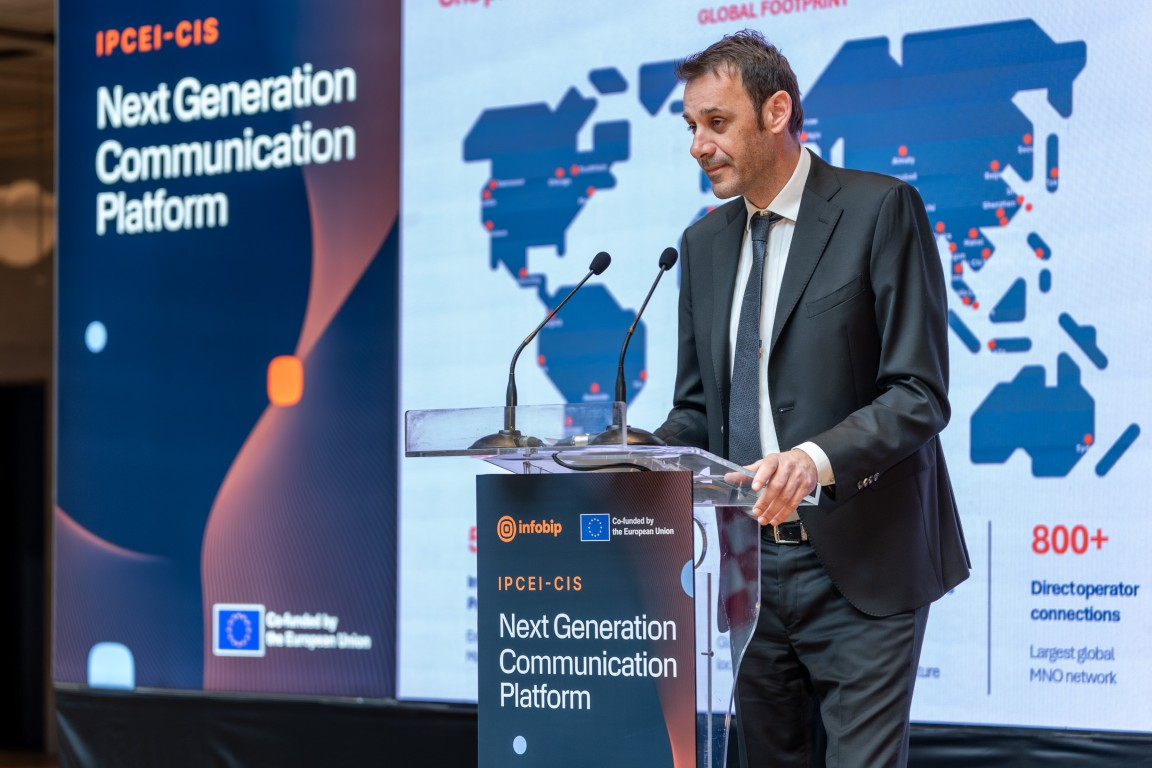
In early 2025, Infobip signed a contract with the European Commission worth more than €80m. This project, called IPCEI-CIS, is a future benchmark for European competitiveness, and today we’re explaining what makes it a big deal together with Monika Ivanović, Infobip’s Program Manager – EU and International Projects, and one of the leaders of the project.
What IPCEI-CIS is
IPCEI-CIS (Important Project of Common European Interest for Next-Generation Cloud Infrastructure and Services) is a large-scale EU project aimed at increasing competitiveness of EU companies. As a part of the project, more than 120 companies from 12 Member States are working together on cloud and communications infrastructure.
Where Infobip comes in is our Infobip Global Communications Platform, which is built with AI capabilities, and is a part of a larger, overarching company strategy of Infobip being an AI-first company.
Why Infobip committed
Monika explains that joining the IPCEI-CIS program was a natural continuation of Infobip’s long-term strategic direction. With global reach, scalable infrastructure, and a proven track record already in place, the investment focused on accelerating existing capabilities rather than building something entirely new. “The investment was not about starting from scratch, but about further developing solutions and technologies that already had strong foundations and clear long-term potential.”
What makes this initiative particularly important for Infobip is not only the research itself, but also the collaborative framework around it. None of this is happening in isolation

Monika Ivanović
Program Manager – EU and International Projects
She adds that the project also creates a different kind of environment for teams involved: “Projects like this provide the space for long-term thinking, deeper exploration, and cross-functional collaboration at a scale that is not always possible in day-to-day product development cycles. That is where much of the value comes from.”
In many ways, the project builds on strategic areas Infobip was already actively developing, while enabling the company to accelerate and expand its AI and cloud-related research efforts through broader collaboration and longer-term investment horizons.
What makes it different
The EU has dozens of projects in movement at any single time, and just this year, the Horizon Europe project alone has 50 strategic partnerships and initiatives worth more than €14b taking place.
This also means that many projects drift from their initial idea. The European innovation ecosystem is currently shaped by a wide range of strategic initiatives and large-scale collaborative projects, many of which evolve significantly over time as technologies and priorities develop.
For Monika, what matters most is maintaining a strong connection between research, execution, and long-term impact. She emphasizes that the goal is not simply to produce research outputs, but to develop technologies and capabilities that can create tangible value over time.
“Projects of this scale come with a significant level of responsibility,” she says. “Beyond the investment itself, there is also a long-term commitment to delivering meaningful results, contributing to the broader European ecosystem, and maintaining the trust that comes with being part of initiatives like this.”
The project has also brought together experts from across Infobip – from engineering and AI to psychology, education, and content. This created a highly collaborative and multidisciplinary foundation for future development and innovation efforts.
A few things from Year 1
Monika admits she initially expected a longer ramp-up period, which is often the case with projects of this scale. However, tangible results and collaborations started emerging relatively quickly.
Since the start of the program, Infobip researchers have had papers accepted at venues including INTERSPEECH and ACM conferences, while the company has also filed a patent application through the European Patent Office. The project has additionally attracted international attention, including coverage by the Financial Times.
Alongside the research outcomes, the initiative has significantly strengthened Infobip’s internal capabilities through new engineering hires and expanded research capacity.
At the same time, Monika notes that the complexity of coordinating research, engineering, product priorities, and broader EU-level requirements has been one of the most challenging – and valuable – aspects of the experience. “Projects like this require constant alignment across very different domains and stakeholders, which is both demanding and extremely rewarding from an organizational perspective.”
What comes next
The second year is focused on what Monika calls the hardest stage: the handover from research to product. It’s the stage where most projects of this type lose coherence. One recent signal is proof that everything is working well: a campaign built on Vocalize, Infobip’s voice AI platform, delivered 200% uplift in user engagement for a Nissan WhatsApp campaign.
For Monika, the long-term value lies not only in individual outcomes, but in the broader capabilities being built over time.
The project does not simply end once a formal cycle is completed – it evolves into a foundation for future development
Monika Ivanović
Program Manager – EU and International Projects
This includes research infrastructure, collaboration with academic partners across multiple European institutions, open-source contributions, and intellectual property development – all of which strengthen Infobip’s long-term innovation capacity and position within the broader European technology ecosystem.
Monika Ivanović is the Program Manager for EU and International Projects at Infobip.